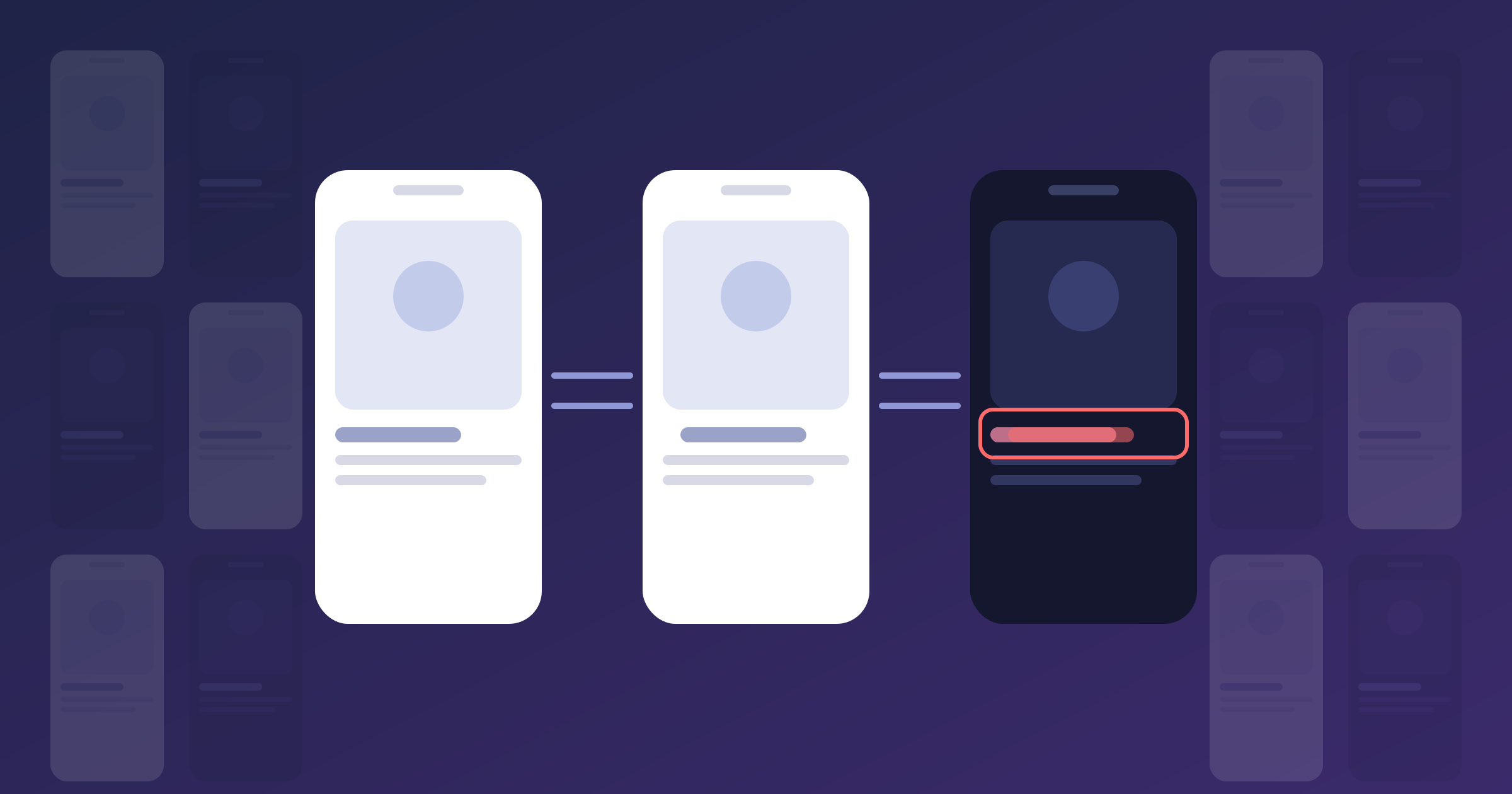

Screenshot tests are one of those things engineers get attached to. On iOS, Tinder® had around 480 of these tests which produced more than 8,000 snapshot artifacts (images), and people on the team really liked them. They catch the kind of visual regression that a unit test never will, like a padding change that nudges a button, or a font that renders a little differently in dark mode.
But somewhere along the way, they also became one of our bigger sources of friction. This is the story of how we noticed, what we tried, and why we ended up moving both iOS and Android to Screenshotbot.
The Problem: Screenshots Living in the Repo
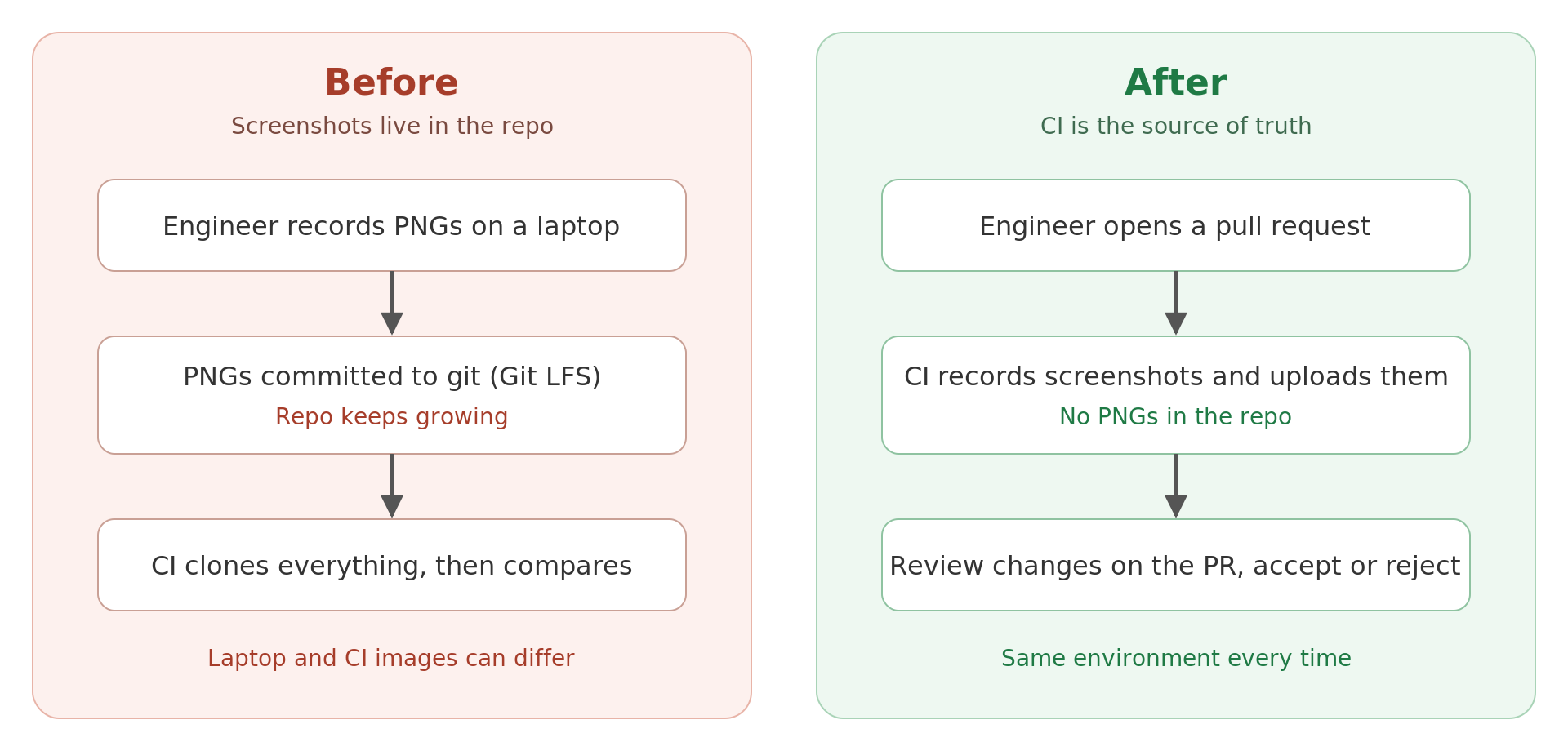
For years, our iOS snapshots lived in the git repo, tracked with Git LFS. That worked fine at first. It stopped working as well when the number of tests grew.
The repo kept getting bigger. Every new snapshot is a PNG, and every changed snapshot is another PNG on top of the old one in history. Adding dark mode variants roughly doubled what we were storing. Engineers also wanted to test on multiple device sizes, which would further multiply it. When the iOS repo hit 16 GB, our infrastructure team was imploring us to shrink it. A big repo means slow clones, and continuous integration (CI) nodes are ephemeral, so they clone a lot.
Local and CI never quite agreed. Because of the OS version or hardware, a snapshot recorded on a laptop could differ slightly from one recorded on CI. We felt this most during the M1 migration. It became common enough that we wrote an internal support article on how to download the artifacts from CI and push them to your PR. When you need a guide to get your own tests to pass, something is off.
Xcode upgrades were messy. Every major Xcode® release changes how Apple®’s frameworks render things, so a lot of snapshots shift at once. We had automation that filed tickets for the differences, but we had to tweak it every time, and because file paths weren't consistent, we often got several tickets for a single test, one per device variant. Teams could also just ignore those tickets, which meant a real visual change could slip to production.
Image diffs are hard to review. Code review tools are built for text. When two screenshots are nearly identical, a subtle shift is easy to miss, and if reviewers can't see the change, regressions get through.
At the same time, Android was just starting its own screenshot testing journey. We didn't want it to walk into the same potholes iOS was already stuck in.
What We Considered
We weighed a few options.
- Internal artifact storage. We could have moved the images there and run a daily or weekly job to report differences and file tickets. That adds tech debt and catches problems after they land, not when they're introduced.
- Other vendors. Some did what we wanted but required specific tooling we don't use, such as Appium for capturing screenshots. Others bundled their own capture library, which would have meant rewriting a large part of our tests and locking us into a vendor-specific implementation.
Screenshotbot was the one that fit. It doesn't care how you capture screenshots. You keep your existing tests and libraries, and it takes over storage, diffing, and review.
Why Screenshotbot Works
Here's what stood out once we started using it.
It plugs into what we already have. We didn't have to rewrite tests. It works with iOS and Android, and with the common snapshot libraries like swift-snapshot-testing, Paparazzi, and Shot. That was the main reason the migration was feasible at all.
CI becomes the source of truth. Screenshots are recorded on CI and uploaded, so the "works on my machine" problem mostly goes away. Nobody records and commits PNGs by hand anymore.
The review experience is good. When a screenshot changes, Screenshotbot posts a report on the pull request. You open it, look at a proper side by side comparison with tools for spotting small differences, and accept or reject the change. That is much easier than comparing two near-identical images by eye.
It keeps history. You can see how a component has changed over time, which helps when someone asks "when did this start looking different?"
Storage is their problem. The images live in their system, so we can drop Git LFS and stop growing the repo.
It's easy to talk to. Screenshotbot is a small company, and you can reach the founder directly. Having someone who answers questions and listens to feature requests made the rollout smoother than it would have been with a big vendor.
It's built with security in mind. They're SOC 2 Type II and ISO 27001 certified, which matters when you're sending screenshots of your app to a third party.
How the Migration Worked
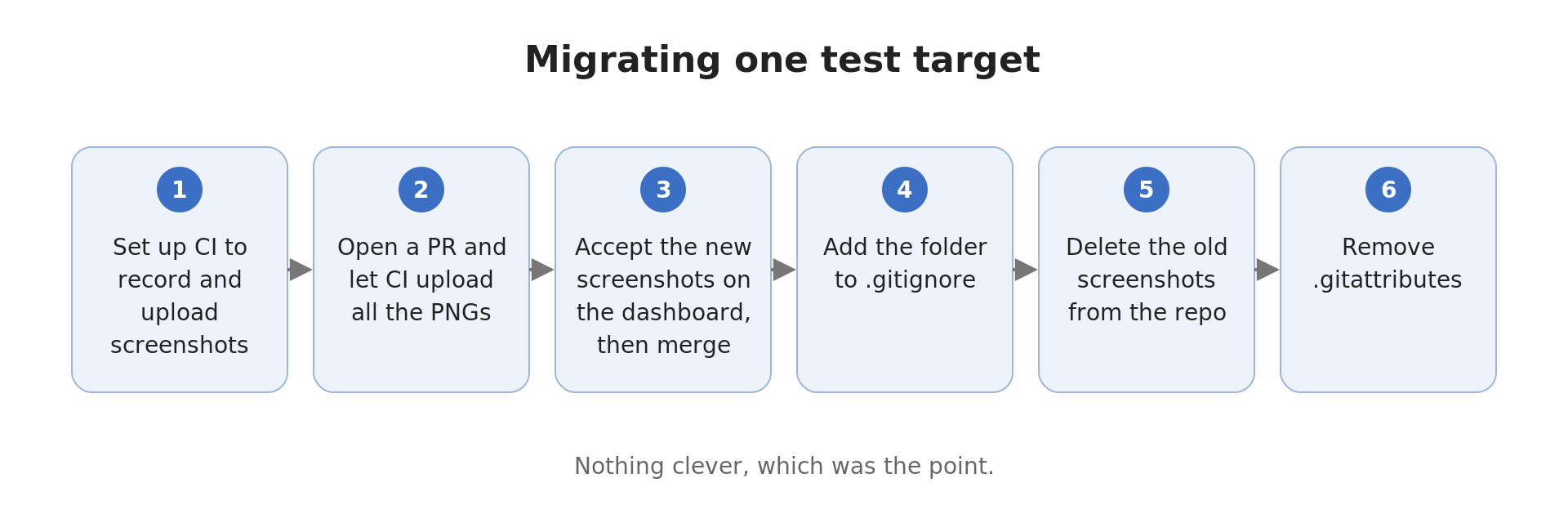
The plan for each test target was simple:
- Set up CI to record screenshots and upload them to Screenshotbot.
- Open a PR and let CI record and upload all the PNGs.
- Accept the new screenshots on the Screenshotbot dashboard for that PR and merge.
- Add the screenshot directory to .gitignore so nobody commits PNGs again.
- Delete the old screenshots from the repo.
- Remove .gitattributes.
How it Went on iOS
The iOS migration took just over two months and involved nearly every team in the iOS guild. Teams migrated their own test targets and reviewed each other's PRs.
Here's where we ended up:
- 81 test targets migrated
- 7,646 PNGs deleted from the repo
- About 1.78 GB of artifacts removed from tinder_ios
That 1.78 GB is the size of the files at the moment we deleted them. It doesn't count all the older versions still sitting in git history, so we expect more savings once we rewrite that history to remove them.
There was a side benefit we didn't plan for. For the first time, our codebase has a clear line between image-based snapshot tests and everything else. That gives us room to tune CI for each kind separately, which we're excited about.
About Android
Android was only getting started with screenshot testing, so we skipped the "migrate" step entirely. We began with Screenshotbot within a couple of months of our first screenshot tests, so the repo never had to carry the weight, and engineers never got used to recording images locally. Adoption has been smooth. Today we have roughly 1,000 screenshot tests on Android. Most of that growth is recent, driven by several major features built in Compose, since our Compose previews generate screenshot tests automatically.
What's Changed
Now that screenshots aren't stuck in the repo, a few things are easier. Testing on more device sizes and languages no longer means worrying about repo size. Some teams have also started using notifications, so the owners of a component hear about it when its UI changes. Xcode upgrades are a bit different too. Teams now review the snapshot changes in a dashboard on their PR, not in a Jira ticket they might ignore.
When you’re tasked with making human connections run as smoothly as possible, every tool counts. Moving our screenshot tests to Screenshotbot is one of the many ways we’re optimizing the Tinder experience, and it has made life easier for the engineers who build it.